Review: The History of Parish Registers
I was delighted to hear that John Wintrip was writing another book. As anyone who has read his previous two books, Tracing Your Pre-Victorian Ancestors and Tracing Your Georgian Ancestors, 1714–1837 (both available from Pen and Sword Books) will know, John’s books are well-researched, meticulously detailed and written with authority. John is a Professional Genealogist with decades of research experience and has been a colleague of mine for many years through our involvement with the Association of Genealogists and Researchers in Archives (AGRA). We served together on AGRA’s Board of Assessors and John is also one of the expert markers for my business, Pharos Tutors’, Advanced Certificate project work. For the sake of full transparency I should let you know that I was provided with a copy of this book in exchange for providing a review, though the review that follows is my own unbiased opinion.
Parish registers are an area of research interest for John and A History of Parish Registers in England and Wales From the Restoration to Civil Registration is the culmination of many years of personal and professional research experience.
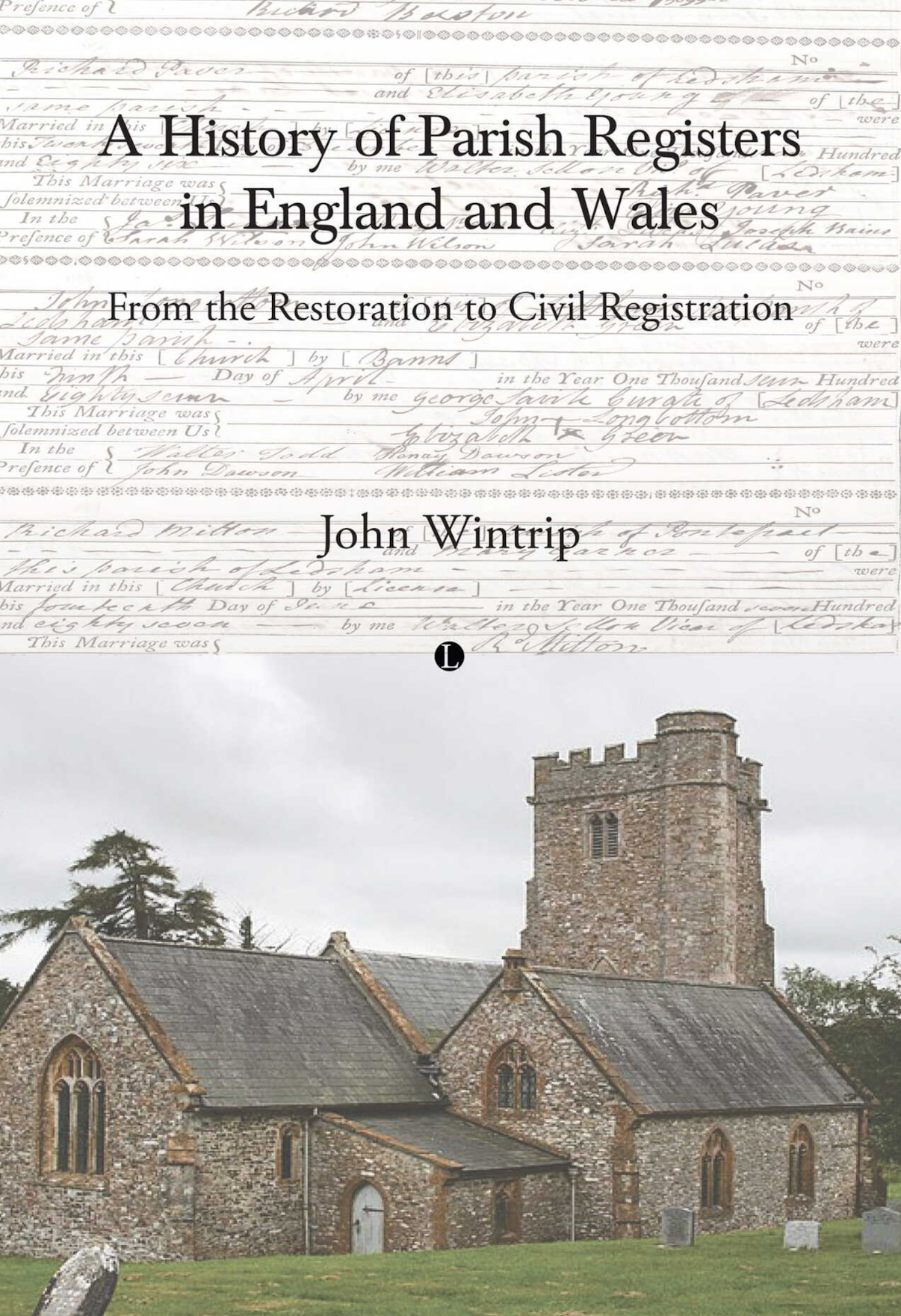
The book starts with an introductory chapter followed by fourteen chapters and a useful glossary:
- Prologue: parish registers before 1660
- Parish registers 1660-1754
- Baptism and burial registers 1754-1812
- Marriage and banns registers 1754-1812
- The Diocese of Carlisle
- William Dade and the dioceses of York and Chester
- The Diocese of St Asaph
- The Diocese of Norwich
- Shute Barrington and the dioceses of Salisbury and Durham
- Baptism and burial registers 1813-1837
- Marriage and banns registers 1813-1837
- Custody and storage
- Bishop's Transcripts
- Epilogue: parish registers since 1837
As the title indicates, the majority of this work covers parish registers from 1660 through to the start of civil registration in 1837. It considers the changes in record keeping with time and the content you may expect to find, looking at the impacts of legal changes and religious and social influences.
The first chapter provides a useful background and historical context, including the origins of parish registers and earlier legislation. There are some interesting added small details here too, such as the difference between parchment and vellum. Chapters One to Four and Ten to Eleven hone in on the detailed content of parish registers in different time periods and are illustrated with many transcribed examples and document images. Other chapters highlight some fascinating local practices and where additional detail was added to the registers above and beyond the requirements of the legislation in place at the time.
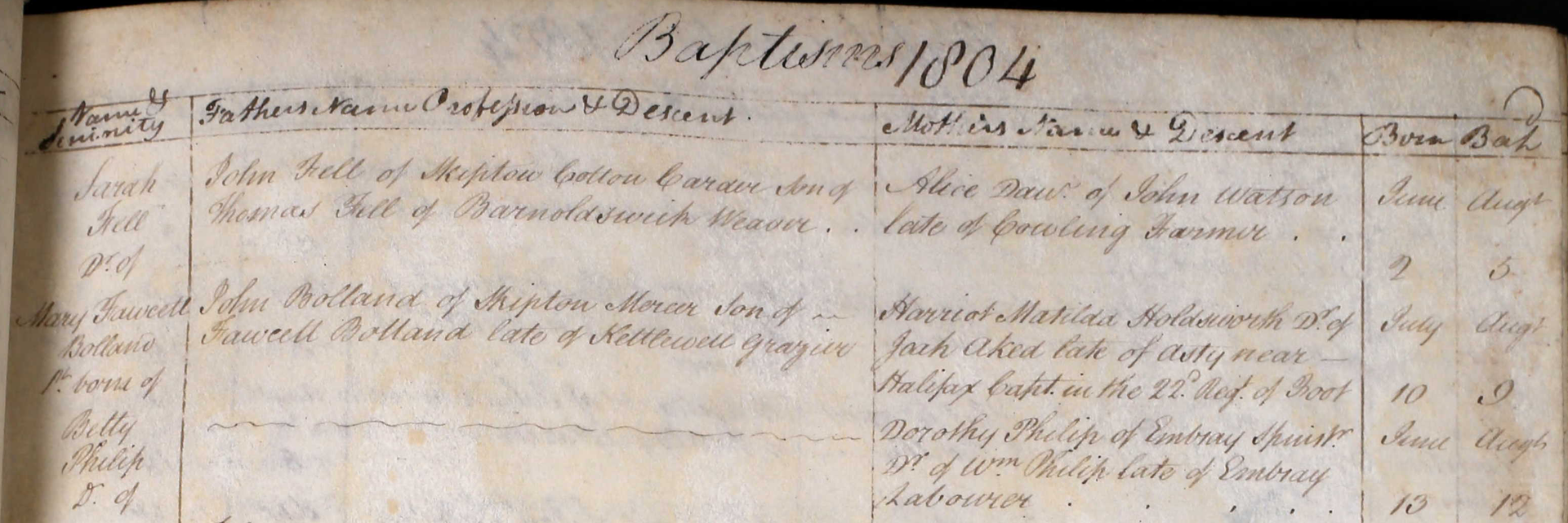
For example, many of us have heard of ‘Dade registers’, a modified form of register entry introduced by Yorkshire clergyman, William Dade, in parts of Yorkshire and beyond from the late 1700s to the early 1800s. There is a whole chapter dedicated to the Dade entries, detailing examples of similar entries in many parts of the country. However, elsewhere we learn that much earlier than this, White Kennett (1660-1728), Bishop of Peterborough from 1718 until his death, had made recommendations including 'the inclusion of the seniority (birth order) of children in baptism entries, and the names of the parents of the parties in marriage entries' and there was also a 'pre-Dade' initiative in the Diocese of Carlisle. There are many other examples of detailed entries for which the elements recorded vary, for example in parts of Wales, Lincolnshire, Durham, Northumberland, Wiltshire, Berkshire, Norfolk and Carlisle. This is not solely a collection of examples, however. There is meticulous research throughout, including assessments of previously published work in this area, a search for copies or transcriptions of the instructions provided in each case, commentary on how widely instructions were followed, and, of course, lots of examples from parish registers.
This is a book for which I can see two potential audiences. It is great for those just getting started on working with parish registers, who really want to understand their sources (knowledge of sources and sound methodology go hand in hand for great research). In addition, for those who have been working with these records for many years, the many examples and local practice chapters provide invaluable insight of what you may discover in your own geographical areas of research.
The History of Parish Registers is available from Lutterworth Press and major bookstores now. An ebook can be ordered via a link on the publisher’s website but it looks like there is now also a Kindle version at Amazon.